
Why we built Zapademy ⚡
A note from the dad who built it.
It started with QBasic
In 1995 I was a kid sitting in front of an MS-DOS computer, making my first games in QBasic. Every line had to be typed just right, and one missing comma meant nothing worked. I loved it anyway: I could invent a world, make up its rules, and then play it.
Today it is much easier to talk to computers. You can describe a game in your own words, and an AI helps you build it. The hard part is no longer the typing. The hard part, and the fun part, is the idea.
How Zapademy was born
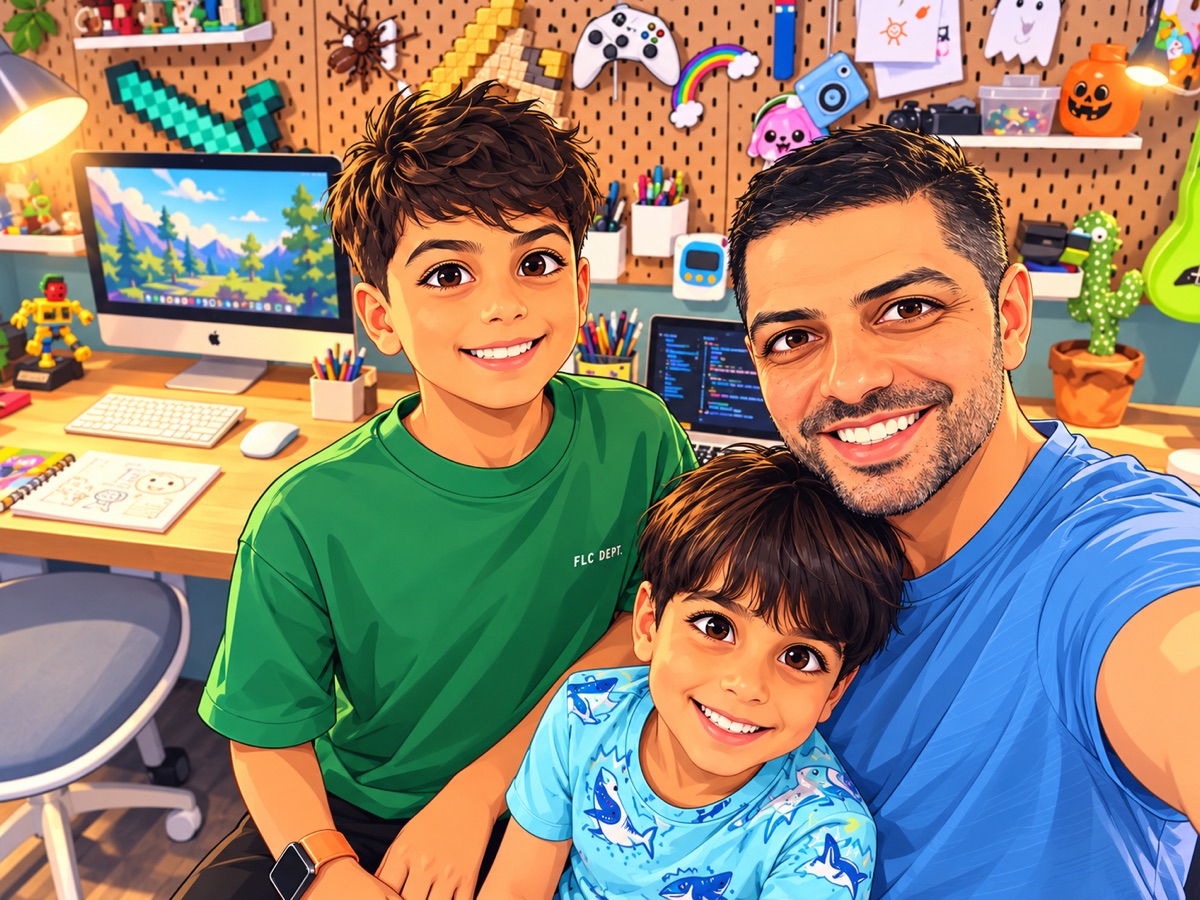
One day my son sat at my computer and started building his own game with AI and Python, with his own rules and his own fantasy world. His friend joined him. For a few days they built creative games from scratch and had a great time.
But behind the scenes I had to buy an AI budget, install Python and VS Code, and set up a GitHub repository to keep their games safe. And when his friend went home, he couldn't play their games, because they only ran on my computer. Then my younger son joined in too, and I knew there had to be a better way.
That's Zapademy. Kids describe a game to Zappy, play it in the browser a moment later, read and change the real Python code, and share it with friends. No software to install, nothing to set up.
It quickly became a family project. The boys' mom is a graphic designer, and she designed the website: the colors, the pages, and the look you see here.
Why this matters now
Nobody knows what the job market will look like when our kids grow up, which field they should study, or what kind of work they will do. But one thing seems clear: kids need to learn to work with AI as a tool, to be creative, and to think well.
Programming is no longer a wall that only a few can climb. What matters is imagination, clear thinking, and the patience to test an idea, see what breaks, and make it better. Then they share it, get feedback from other kids, and find out if players love it. Making a game teaches all of that: not only how to work with AI, but also the feedback loop that every successful man and woman in work and business is built on.
Safety first, because my own kids use it
I have a PhD in computer science and have worked in computer security for 20 years. I know no system is ever perfectly safe, so I won't promise that. What I can promise is that I built Zapademy for my own kids and family first, and I did my best for every kid who uses it:
- No personal information. No real names, addresses, photos, or email addresses from kids. A nickname and a password are all they need.
- No ads and no tracking. No third-party trackers, no analytics scripts, no selling data.
- No chatting with strangers. Kids can't message each other. They talk only to Zappy.
- Every game is checked by a person. I personally play every game before it appears on the site.
- Extra guardrails. On top of the safety Claude (the AI behind Zappy) already has, Zapademy adds its own layers: rules for what Zappy will build, games locked in a sandbox, and limits on use.
If you ever see something that worries you, please contact me. I read every message.
— Hossein, founder of Zapademy